
From Selection to Skills: The Africa Fellows in Education Program in Action

What does it take to turn a strong research idea into evidence that can actually change how children are taught?
That question, and many others like it, brought fifteen fellows from across Sub-Saharan Africa to the University of Cape Town for an intensive week of learning, debate, and collaboration.

The fellows participating in the training were drawn from two related initiatives supported by the Yidan Prize. The Africa Fellows in Education Program (AFEP) - an initiative of the Global Education Analytics Institute (GEAI) and the Partnership for Economic Policy (PEP) that invests in building a generation of African researchers capable of producing and using rigorous evidence to improve education systems on the continent - were joined by three fellows from the IIASA–SALDRU Human Capital in Africa collaboration.
These researchers focus on how near-term investments in education and human capital relate to long-term outcomes across multiple countries in the region.
Representing ten countries, Kenya, Lesotho, Zimbabwe, South Africa, Benin, Togo, Sierra Leone, Ghana, Côte d'Ivoire, and Burkina Faso, the fellows are not novices finding their feet. They arrived in Cape Town already embedded in research institutions, universities, and government bodies, each working on a project tackling a specific education challenge in their home country. The week was designed to sharpen that work, not start it.
Understanding the Landscape
The training was hosted by the African Foundational Learning Data Hub (AFLEARN) under the theme Analysis of African Education Data for Policy and Practice. Rather than diving immediately into statistical techniques, the programme began by stepping back to examine the broader education data landscape.
Fellows explored the different types of education datasets available to researchers, how they are produced, and how they have historically been used to shape education policy and practice. This opening session helped the fellows to situate their research projects within the wider ecosystem of education evidence across Africa.
From Evidence to Paper
Soon after exploring the education data landscape, the course turned to an equally important question: how to communicate research effectively.
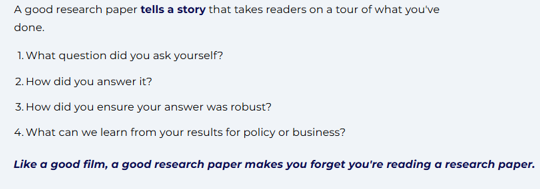
Fellows were introduced to the structure of a strong applied economics research paper - how a clear research question, appropriate data, and a well-chosen empirical strategy come together to produce convincing evidence. The discussion unpacked how empirical papers are constructed and how researchers present results in ways that make their arguments clear and persuasive.
At its core, the message was simple: a good research paper tells a story.
Hello Data, Nice to Meet You!
The second module then turned to a step that is often overlooked in technical training: getting to know your data.
Before running sophisticated models, researchers need to understand what their data actually contains - how it was collected, what its limitations are, and whether it can genuinely answer the question they care about.

Throughout the sessions, fellows found themselves returning to two fundamental questions:
What is my research question?
Do I have the data needed to answer it?
These questions may sound simple, but confronting them early often determines whether a research project holds up or falls apart.
Building Analytical Tools
From there, the course moved into the analytical tools commonly used in applied education research.
Module three focused on regression analysis, introducing fellows to a practical “regression toolkit.” Sessions explored key ideas such as ceteris paribus reasoning, selection and omitted variable bias, and the interpretation of dummy variables and interaction effects. The emphasis throughout was on understanding what regression results actually mean in real research settings.

Applied examples: Methods for evaluating education programmes in Africa
Module four shifted attention to how researchers evaluate education programmes in Africa. Fellows worked through published studies and hands-on exercises using methods such as randomised controlled trials (RCTs), difference-in-differences, and fixed effects models. The focus was not only on the mechanics of the methods, but also on when each approach is appropriate for answering different types of research questions.
The final day turned to the practical side of research. Fellows strengthened their ability to formulate research questions, plan research projects from start to finish, and identify the tools and resources available to applied researchers.
Throughout the week, each session built on earlier discussions, reinforcing the idea that good research is not a collection of isolated techniques but a connected process that moves from questions, to data, to analysis, and ultimately to evidence that can inform policy.
Learning That Went Both Ways
What made the sessions come alive was the people in the room. Because every fellow was already working on a real research project, no exercise felt abstract. When a methodological challenge came up in discussion, it was often because someone in the room was facing it in their own work.
Facilitators leaned into this. When questions emerged without clear answers, they treated them as live demonstrations of how experienced researchers think - exploring the data, testing assumptions, and sitting with uncertainty before drawing conclusions.
Peer learning became a powerful part of the experience, with fellows sharing insights from very different education systems across the continent.
Beyond the Classroom
The week was not all regressions and code. A welcome reception, dinner at the historic Groot Constantia wine estate, and an evening at the V&A Waterfront gave the cohort time to relax and connect outside the classroom. These moments helped build relationships that will continue throughout the fellowship. Research communities are built not only through shared work, but also through shared experience.
Why This Matters
At its core, the Analysis of African Education Data for Policy and Practice training equipped AFEP fellows with skills that will strengthen their research and enhance the evidence they produce.
The fellows themselves occupy influential positions within universities, research centres, and policy institutions across the continent. The knowledge and skills they strengthen therefore extend beyond their individual research projects - flowing into the classrooms they teach, the colleagues they mentor, and the policy conversations they help shape.
As the fellowship moves toward its final research presentations and policy workshops in 2027, something larger than a single training week is taking shape: a growing network of African researchers committed to improving education systems through evidence that is rigorous, locally grounded, and built to last.
Read the article: AFEP Fellows Strengthen Data Skills at Intensive Education Data Workshop in Cape Town