
SurveyCTO Course
Accurate measurement of early grade reading and numeracy is essential for improving foundational learning outcomes. To generate high-quality data, assessment tools must be accurate, consistent across provinces and projects, and technically robust. As the education sector increasingly adopts digital data collection, there is a growing need to strengthen capacity in SurveyCTO—both for general survey design and for the administration of timed Early Grade Reading Assessments (EGRA) and Early Grade Mathematics Assessments (EGMA).
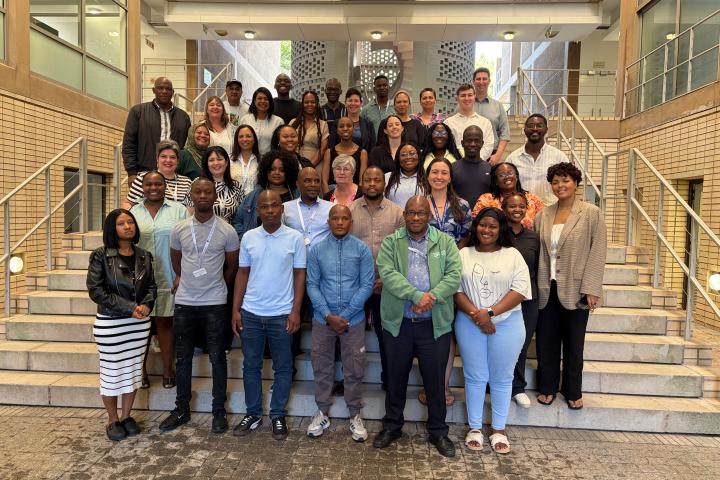
Five full days of hands-on surveying brought participants together in Cape Town to build both foundational and advanced skills in SurveyCTO. The training covered core survey design principles as well as more advanced protocols, with a strong practical focus on using SurveyCTO to administer EGRA and EGMA. Through guided exercises, real-world assessment examples, and friendly competition-based activities, participants gained the confidence to design, deploy, and manage high-quality education surveys in field settings.

Participants represented a wide range of sectors, including the Department of Basic Education, the National Education Collaboration Trust, non-governmental and non-profit organisations, and the private sector. This diversity enriched the learning environment, enabling cross-sector knowledge sharing, fostering discussion around shared challenges, and supporting the development of a community of practice among participants.
The training was hosted by the Department of Basic Education (DBE), the African Foundational Learning Data Hub (AFLEARN) at DataFirst, and the SALDRU Survey & Data Hub. Together, the partners supported participants in building strong foundational skills in SurveyCTO form design, secure data workflows, and best practices for education data collection.
The course aimed to:
- Strengthen national and provincial capacity to deliver standardised EGRA and EGMA assessments using timed SurveyCTO modules.
- Support DBE’s goal of harmonised tools that produce comparable results across provinces, programmes, and implementing partners.
- Enhance technical competency across government, NGOs, technical assistance teams, and private fieldwork firms to implement assessments at scale.
- Ensure participants are confident in using grid-timed and flash-timed plug-ins for early grade reading and numeracy tasks.
By the end of the five days, participants were better equipped to implement rigorous, standardised foundational learning assessments—contributing to more reliable data and stronger evidence for decision-making across South Africa’s education system.