
Building Country-Level Evidence on Foundational Learning

Across the Global South, from Sub-Saharan Africa to South Asia and Latin America, millions of children complete years of schooling unable to read a simple paragraph or solve basic arithmetic problems. The disconnect between time spent in school and actual learning has become one of the defining education challenges of our time, and addressing it requires reliable evidence on what children can actually do. One organisation at the forefront of this effort is the People's Action for Learning (PAL) Network. Unlike most assessments, which take place within school walls, PAL measures foundational literacy and numeracy where children actually live - reaching them whether they are enrolled or not. Its reach, approach, and ambition are explored later in this blog.
Responding to this challenge requires not only better data, but the capacity to use it. It was precisely this gap that a new collaboration set out to address. The week of 9–13 February marked the beginning of a new collaboration between DataFirst's AFLEARN HUB and the PAL Network. This partnership brought together the scale of the PAL Network's citizen-led assessment data with the technical expertise of the data-driven AFLEARN team, aiming to strengthen countries' ability to analyse and use learning evidence independently.
In total, 89,000 children were assessed across more than 59,000 households in 12 countries: Bangladesh, Kenya, Mali, Mexico, Mozambique, Nepal, Nicaragua, Pakistan, Senegal, Tanzania, Uganda, and a school-based pilot in Botswana. Participants represented OMAES from Mali, LARTES-IFAN from Senegal, UWEZO Uganda, USAWA Agenda from Kenya, UWEZO Tanzania, and the PAL Secretariat staff, all joining to learn how to communicate findings at the country level — reducing dependency on external analysts and increasing local engagement with evidence. The AFLEARN–PAL collaboration was designed to address the gap between data producers and data users.
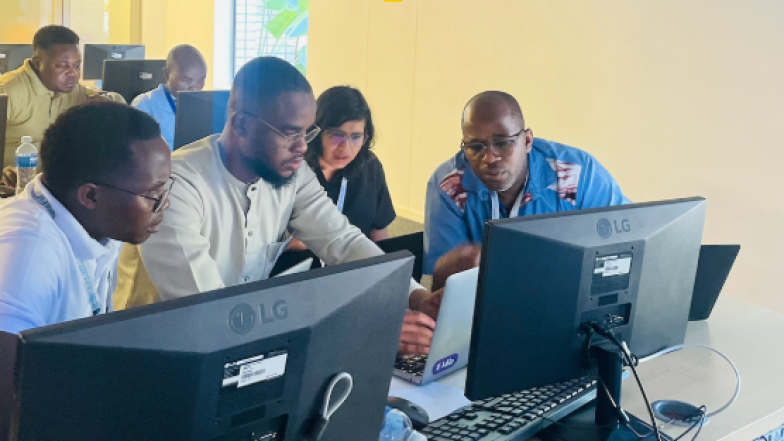
The AFLEARN team curated a week-long, in-person course hosted at UCT's School of Economics. Acknowledging the steep learning curve often associated with R, a pre-course refresher pack was provided, accompanied by virtual sessions to guide participants through the fundamentals of working with R prior to the in-person training in Cape Town.

Participants arrived with diverse backgrounds - many experienced in field coordination and assessment implementation, but with limited exposure to R and statistical workflows. Early sessions focused on understanding ICAN–ICAR data structures and moving beyond spreadsheet-based analysis toward scripted, transparent processes. As the week progressed, participants began cleaning real datasets, running statistical summaries, and interpreting results within their own country contexts.
The five-day course alternated between lectures and hands-on lab sessions. Each participant was assigned an individual capstone project which they progressively developed during the week, meaning the training simultaneously functioned as capacity development and the first stage of country-specific report production. By the end of the course, participants were equipped to: understand ICAN–ICAR data structures, follow a structured data analysis workflow, conduct statistical analyses, and generate policy-relevant insights.
By the end of the course, participants were equipped to:
- Understand ICAN–ICAR data structures
- Follow a structured data analysis workflow
- Conduct statistical analyses
- Generate policy-relevant insights

To understand the full significance of this collaboration, it helps to know the organisation whose data sat at the centre of it all. The PAL Network traces its roots to Pratham's pioneering work in India from 2005, generating robust evidence on learning outcomes through oral, one-on-one household-based assessments. Following the publication of its flagship report (launched on 25 November 2025), which detailed foundational literacy and numeracy levels across 12 countries from the Global South, the PAL Network convened representatives from across its member organisations to strengthen their capacity to produce country-level foundational learning reports aligned with Sustainable Development Goal (SDG) 4.1.1(a).
A noteworthy aspect of the PAL Network's work is the reach and scale of its surveys. Importantly, assessments include both enrolled children and those who are out of school or frequently absent — restoring visibility to learners often excluded from traditional school-based assessments and shifting the question from what do students in school know to what do children in a community know.
This collaboration marks another step forward for both the AFLEARN Data Hub and the PAL Network in advancing children’s foundational learning across Africa, Asia, and the Americas. By strengthening the analytical capacity of practitioners working closest to the data, the partnership supports the full citizen-led assessment cycle — measurement followed by action. Participants leave not only with new technical skills, but with partially completed country analyses that can be refined into national reports.
The ICAN–ICAR data will also be published on the DataFirst open data portal in the near future, further supporting transparency and enabling wider use of these data by researchers and policymakers.